
Education in Italy
Education in Italy is compulsory from ages 6 to 16 and divided into five stages: kindergarten, primary school, lower secondary, upper secondary, and university. Education is free at public institutions and available to resident children of all nationalities. There is both a public and private education system.
In 2018, Italian secondary education was assessed as below the OECD average. Students performed poorly in reading and science, while mathematics scores were near the OECD average. Reading and science scores have declined, but mathematics has remained stable.
Significant regional disparities exist in educational performance. Northern Italian schools perform near or above the national average, while southern schools often lag behind. Trento and Bolzano recorded above-average reading scores.
For reading literacy, Italy ranked 16th in the 2018 Progress in International Reading Literacy Study. This reflects a moderate standing compared to other nations.
Tertiary education in Italy includes public universities, private universities, and elite graduate schools. Italy has 33 universities ranked in the world’s top 500, trailing only the UK and Germany in Europe. Notable institutions include the University of Bologna, the oldest in operation, and several others recognized globally for excellence.
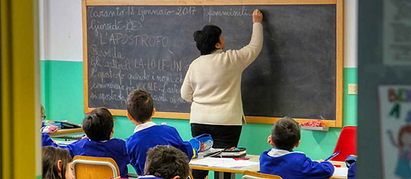

The Italian educational system is marked by early specialization, requiring students around age 14 to choose between general or vocational high schools. These schools emphasize academic rigor and are structured with a strong theoretical focus. The curriculum at specialized high schools targets specific subjects such as sciences or humanities, although all students must take Italian, math, and science. Teaching predominantly relies on lectures, with teachers leading from the front and students taking notes at individual desks.
In contrast to Italy, other Western countries—such as the United States—feature a more generalist model through high school, delaying subject specialization until college. U.S. schools also incorporate a broader range of assessment methods, including continuous assessment, group work, and interactive projects, as opposed to Italy’s reliance on oral exams and long-form written answers.
The Italian school week is typically six days long, with shorter school days that usually finish by early afternoon. Unlike in the U.S., Italian schools do not have official after-school programs, sports, or clubs as part of the educational offering; such activities are generally pursued independently. The overall classroom atmosphere in Italy tends to be more structured and teacher-centered than the collaborative, student-centered approach more common in American schools.
Regarding higher education, Italy’s university system has been reformed to align with European standards, adopting a two-cycle program (three-year bachelor’s followed by a two-year master’s degree). This change has made Italian degrees more compatible on an international level. Meanwhile, the U.S. higher education system continues to offer its own blend of flexibility and specialization, usually following a generalist approach in the initial years of college.
Economics of Italy
Italy is the eighth-largest economy globally and the third-largest in the European Union, underpinned by robust manufacturing, services, and tourism sectors. However, its economic growth has slowed recently, mainly due to rising interest rates and diminished global demand, with projections for 2023 and 2024 both falling below 1%.
Manufacturing plays a vital role, making Italy Europe’s second-largest manufacturing hub. The sector is driven by a vast network of small and medium-sized firms, producing machinery, chemicals, fashion, textiles, automobiles, and household appliances, all distinguished by high quality.
The services sector is another linchpin of the Italian economy, featuring strong banking and retail industries. Milan, in particular, stands out as a major center for finance and banking within the country.
Tourism significantly contributes to the national revenue, thanks to Italy’s rich cultural heritage and scenic landscapes. Agriculture also remains important, with Italy ranking as a leading European producer of wine and olive oil.
Despite recent growth in 2022, the economy is hampered by regional imbalances, especially between the more developed North and the less prosperous South, which suffers from higher unemployment. Italy also faces a high public debt level, with a debt-to-GDP ratio of 134.8%. Its main trading activity is concentrated within the EU, accounting for 59% of trade, but the United States is also a key partner. In 2023, exports grew slightly, especially in food, sporting goods, and pharmaceuticals, while imports declined.


Italy’s economy, despite notable achievements, faces several structural and non-structural challenges today. A key issue is the country’s lagging annual growth rates, which have often been below the EU average for many years. In addition, the late-2000s recession had a significant impact on the Italian economy, further constraining its progress.
A major concern is Italy’s public debt, which has risen sharply since the 1980s due to extensive government spending. This fiscal challenge poses ongoing risks to economic stability and limits the government’s ability to respond flexibly to crises or invest in growth-promoting initiatives.
There is a pronounced regional disparity in living standards and economic output across Italy. Northern Italy enjoys much higher average GDP per capita, exceeding the EU average, while parts of Southern Italy fall significantly below this benchmark. Central Italy tends to exhibit GDP per capita figures close to the national average.
In recent years, Italy’s GDP per capita and employment rates have improved, drawing closer to Eurozone averages. However, these official statistics are contested due to the substantial shadow economy—especially in the South—where informal jobs distort inactivity and unemployment data. In practical terms, Southern Italy’s economic conditions have become relatively similar to those in Central Italy.
References:
“Back to School: 10 Things You Should Know about the Italian School System.” ITALY Magazine, www.italymagazine.com/featured-story/back-school-10-things-you-should-know-about-italian-school-system. Accessed 2 Nov. 2025.
Redaelli, Simone. “The Obsolescence of the Current Italian Compulsory Education System.” Culturico, 16 Nov. 2020, culturico.com/2020/06/20/the-obsolescence-of-the-italian-education-system.
Pettinger, Tejvan. “Italian Economic Decline.” Economics Help, 18 Nov. 2017, www.economicshelp.org/blog/6350/economics/italian-economic-decline.